LoL Worlds 2026 has reached the stage where reputations start turning into records.
The 16-team Swiss Stage runs through October 31, with three wins enough to reach the Knockouts and three losses ending a team’s run. The stage opens with best-of-ones, while progression and elimination matches move to best-of-three – a format that keeps changing the pressure as the field separates.
A few rounds in, some of the first answers are already here. Gen.G and Dplus KIA have qualified at 3–0, while other contenders have found themselves much closer to the edge than expected.
Here are five storylines worth following as Swiss continues.
Storyline #1: How Strong Is the LCK/LPL Grip This Time?
The safest assumption at Worlds is still that Korea and China will occupy a large part of the late-stage conversation.
At the start of Swiss, Riot’s Global Power Rankings had Hanwha Life Esports, Gen.G and Bilibili Gaming in the top three, with T1 fifth. Dplus KIA and Anyone’s Legend were also inside the top ten.
The first few rounds have already made that picture more interesting.
Gen.G and Dplus KIA have secured Knockout spots at 3–0, reinforcing the strength of the LCK’s leading teams. On the LPL side, Invictus Gaming and Top Esports recovered to 2–1 after opening losses.
Hanwha Life has moved in the opposite direction. After defeats to Gen.G and Invictus Gaming, the pre-Swiss No. 1 sits at 1–2 and one loss away from elimination.
So the question is no longer simply whether Korea and China will dominate the Knockouts. It is which teams from those regions will actually make it there in the shape everyone expected.
Storyline #2: T1 Still Refuses to Be an Ordinary Contender
Riot’s pre-Swiss Global Power Rankings placed T1 fifth, but Worlds history makes that number feel incomplete.
The defending champion is chasing a fourth consecutive world title, and that creates a familiar problem: how much weight should current form carry against a team with this much tournament pedigree?
A clean Swiss run makes the answer easy. A messy one makes things much more interesting.
That tension is why T1 matches tend to stay relevant beyond the result itself. Every series becomes another piece of evidence in the same argument – whether this is still the team everyone eventually has to beat, or whether the rest of the field has finally caught up.
Storyline #3: G2 and Karmine Corp Carry Different European Expectations
Europe entered Swiss with two very different types of pressure.
G2 arrived as an established contender and ranked fourth in Riot’s pre-Swiss Global Power Rankings. Karmine Corp had to fight through Play-In, eventually sweeping MVK Esports to secure the final Swiss spot.
A few rounds later, that contrast has become sharper.
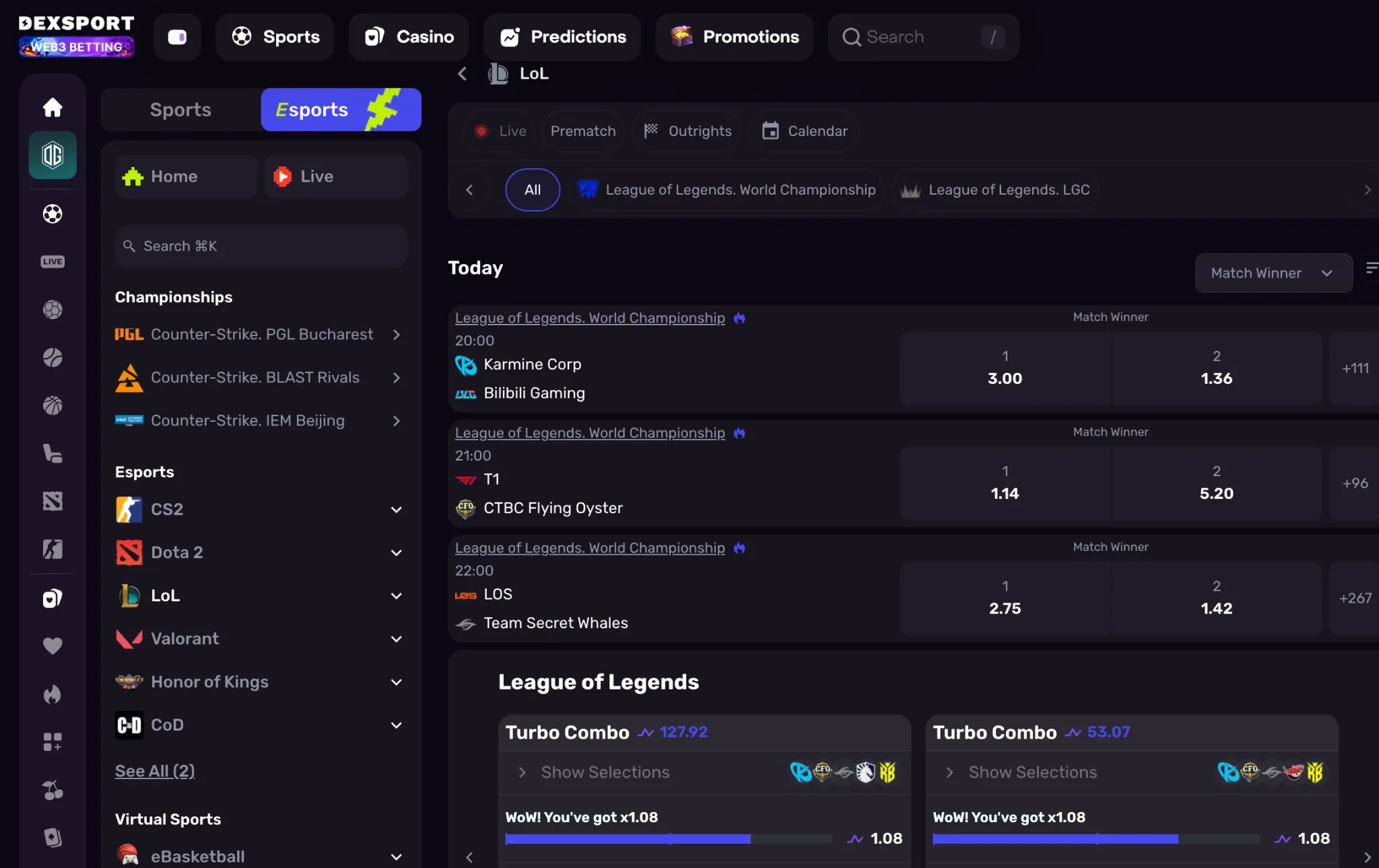 LoL Worlds 2026 match markets on Dexsport during the Swiss Stage. Source: Dexsport
G2 is now one loss away from elimination after falling to Top Esports, while Karmine Corp is still trying to prove that its Play-In form can carry into the deeper field.
That means a good run still carries different meaning for each team. G2 needs to justify expectations that existed before Worlds began. KC is testing whether momentum built in Play-In can survive once the level of opposition rises.
For anyone following Worlds through Dexsport’s match markets, those are exactly the kinds of situations where reputation and recent evidence can point in different directions.
Storyline #4: Play-In Momentum Has an Expiration Date
Surviving Play-In gives a team something most Swiss entrants do not have: recent stage experience.
Those teams have already played elimination League, adjusted between series and dealt with the pressure of knowing one bad day could end their tournament.
That can be an advantage.
But Play-In also creates a temptation to overrate what just happened. Solving a specific set of opponents is not the same problem as preparing for the strongest teams in Swiss.
Momentum tells us something about form and resilience, but each new draw tests whether those lessons still apply. A team can arrive battle-tested and still discover very quickly that the next stage demands different answers.
Storyline #5: Swiss Makes Every Result Change the Next Question
The most interesting part of Swiss is not simply that teams need three wins.
It is what each result does to the route ahead.
By this point in Swiss, the same next match can mean very different things depending on a team’s record. At 2–1, one win sends a team to the Knockouts. At 1–2, another loss ends the run. At 0–2, every remaining series becomes a fight for survival.
The same format therefore creates completely different stakes depending on where a team sits. One result can turn the next series into a chance to qualify, a chance to recover or the end of the tournament.
That structure is also what makes Dexsport’s current Worlds campaign fit the event better than a short promotion built around one weekend. Its $30,000 LoL Worlds challenge keeps qualifying betting volume on one leaderboard from Play-In through Swiss and the Knockouts.
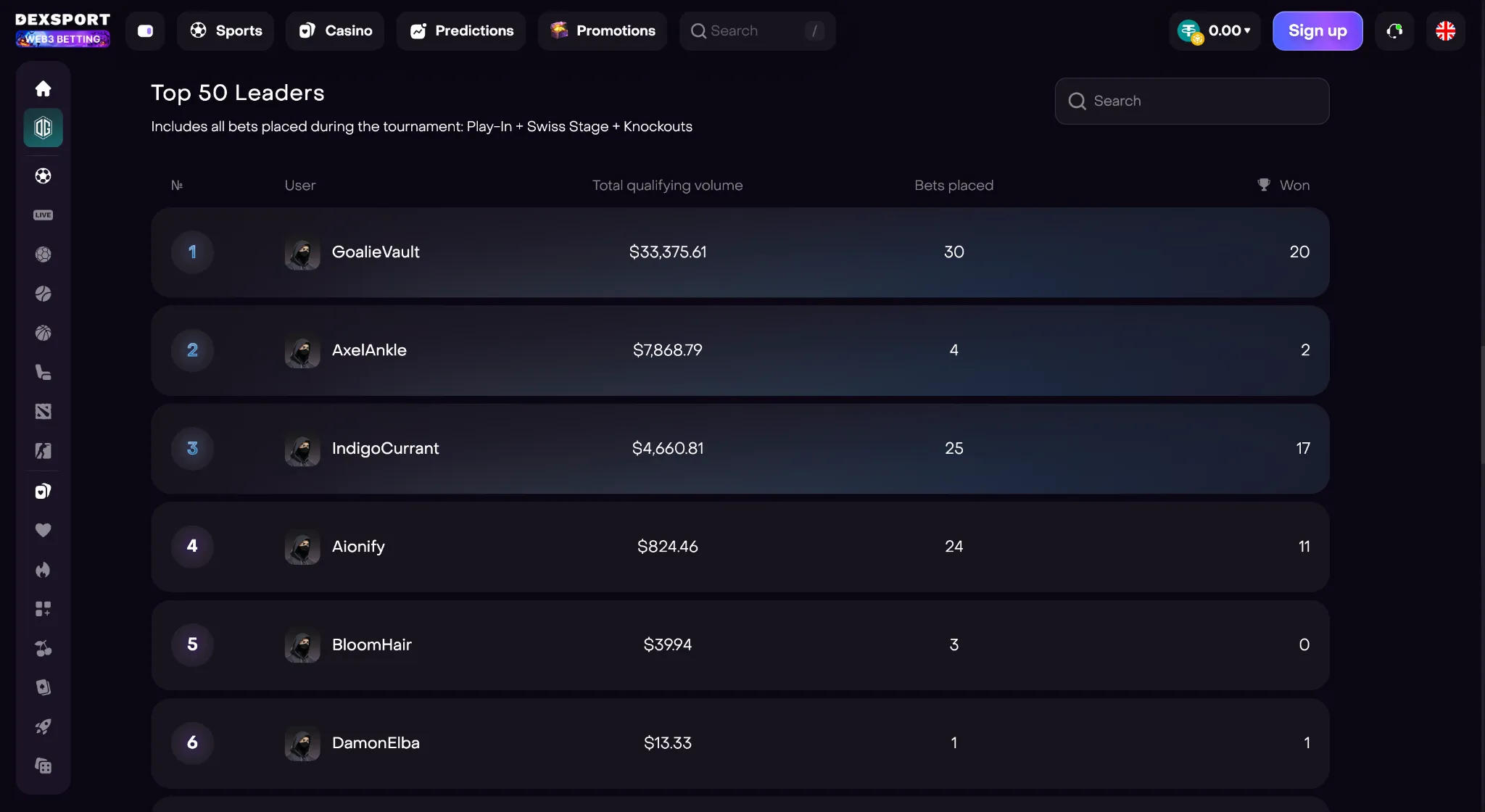 Dexsport’s LoL Worlds 2026 leaderboard tracks qualifying volume across Play-In, Swiss and the Knockouts. Source: Dexsport
Players activate the challenge once, with both winning and losing settled real-money bets able to contribute. The minimum qualifying stake is $10 at odds of 1.3 or higher, and the top 50 positions share $30,000 in freebet rewards.
There are no Swiss-specific resets. A bet placed early in the tournament remains part of the same leaderboard run when the field reaches the Knockouts.
That is notably different from the VALORANT Champions campaign RaGEZONE covered earlier this year, where Dexsport used separate weekly cycles.
The difference makes sense. VALORANT Champions had its own event rhythm. Worlds Swiss is built around accumulating pressure, changing draws and a single route toward elimination or qualification.
By October 31, eight teams will remain.
The first few rounds have already shown that preseason hierarchy only gets you so far. The next question is which teams can turn those expectations into a Knockout spot before Swiss runs out of second chances.