


Betting brands have become a familiar presence across esports. New partnerships appear regularly, jerseys get updated, and social feeds fill with launch posts – but within a few weeks, most of that activity tends to fade from view.
When OG announced that its Counter-Strike 2 roster would compete under the name OG.Dexsport, the initial reaction was predictable. Another sponsorship. Another logo on a jersey.
A few weeks later, however, this particular partnership has begun to stand apart from the usual pattern.
A Sponsorship That Didn’t Fade
Most esports sponsorships follow a familiar arc. A brand pays for exposure. The team wears the logo. There might be a giveaway or a short content series. Then the momentum fades.
The OG.Dexsport partnership includes those elements, but it also extends beyond them. Dexsport has become part of OG’s ongoing content calendar, with behind-the-scenes features, fan campaigns, and tournament-week activations continuing well beyond the initial announcement. Rather than feeling like a launch campaign, the collaboration has settled into a consistent rhythm.
That continuity is subtle rather than dramatic, but it raises an interesting question: why has this partnership remained visible while so many others quietly disappear after launch?
Part of the answer lies in what happened before the announcement itself.
A Partnership with Context
Viewed in isolation, the OG sponsorship looks like a straightforward deal between an esports organisation and a betting platform. Looking at the months leading up to it, however, reveals a broader context.
In February 2026, Dexsport integrated Chiliz (CHZ) into its platform – the fan token ecosystem that OG has been part of for years – before launching a $50,000 CHZ Mega Drop campaign. By the time the partnership with OG was announced, Dexsport had already been building within the same ecosystem for several months.
Taken together, the CHZ integration and the OG partnership suggest a gradual expansion rather than a standalone sponsorship. Whether planned from the outset or developed over time, both moves point in the same strategic direction.
What the First Month Reveals
It is still too early to assess the long-term impact of the partnership. It is, however, enough time to observe what happened after the announcement.
The OG.Dexsport branding has become a regular presence across broadcasts and social channels. More importantly, the collaboration has continued producing new touchpoints instead of relying solely on launch momentum.
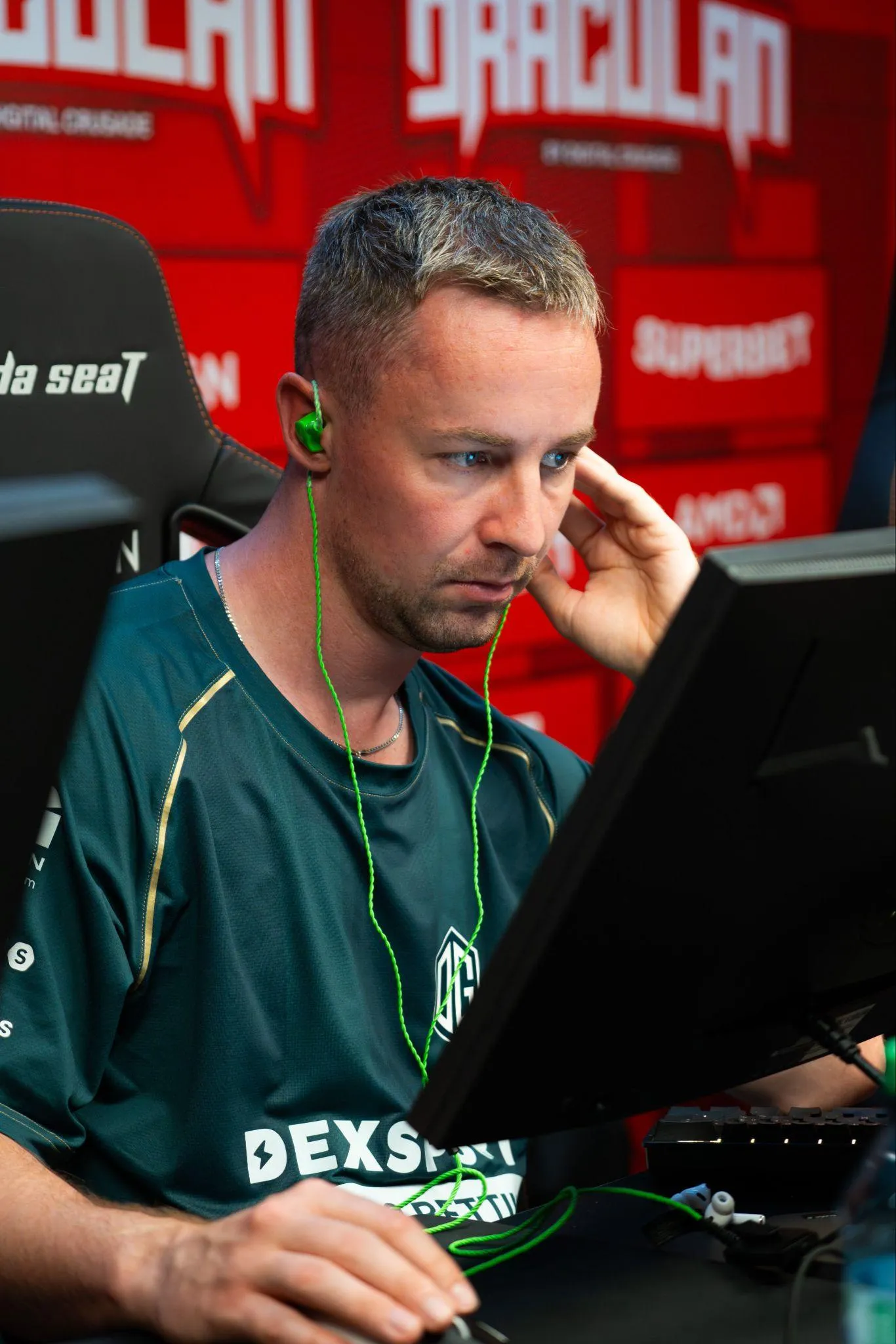 Casper “cadiaN” Møller wearing the OG.Dexsport jersey. Source: X.com
Community campaigns now align with the team’s competitive schedule, while content releases and fan activations continue to accompany tournament appearances. In an industry where many sponsorships become quieter after their debut, maintaining that level of activity is notable in itself.
The Value of Consistency
Esports audiences are exposed to brand partnerships constantly. Most are forgotten within weeks. The ones that leave a lasting impression usually have one thing in common: they continue to create reasons for fans to engage after the announcement has passed.
The OG.Dexsport partnership is still in its early stages, but it has already moved beyond launch mode. The continued rollout of activations suggests that both organisations view the collaboration as an ongoing programme rather than a short-term promotional campaign.
For Dexsport, it complements a broader period of expansion that has included the DESU token listing on MEXC and World Cup-related initiatives. For OG, it fits naturally within the organisation’s long-standing emphasis on digital fan engagement. Together, those developments make the partnership feel less like an isolated sponsorship and more like part of a broader direction for both organisations.
Taking the Long View
In esports, the announcement is often the least interesting part of a sponsorship. What matters is what happens once the headlines disappear.
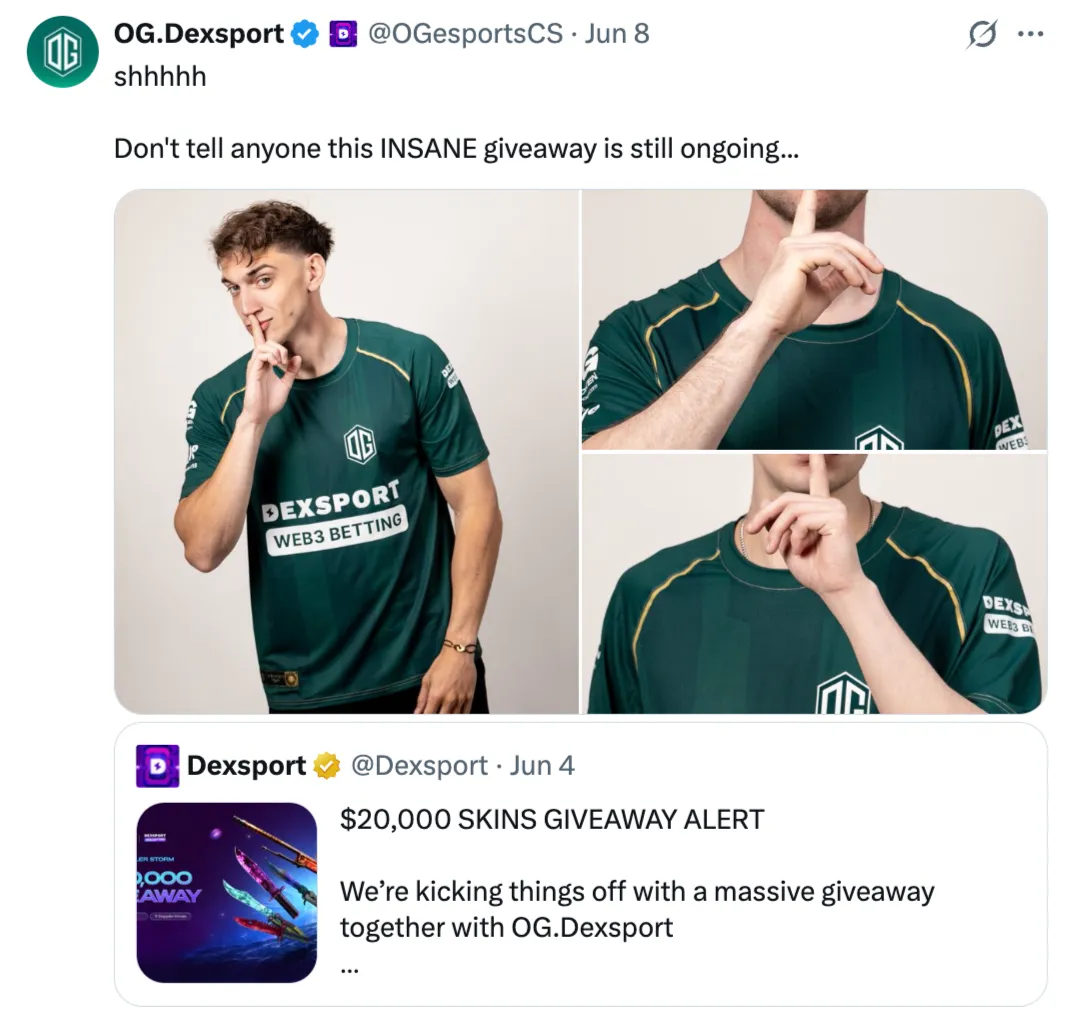 The Dexsport x OG partnership in action. Source: X.com
The first month of OG.Dexsport suggests a partnership focused less on generating a single wave of attention and more on building an ongoing presence through content, community initiatives, and tournament-linked activations.
In a sector where visibility is easy to buy but much harder to sustain, that may prove to be the more meaningful measure of success.




